


Anyone who's searched an online marketplace for a motorcycle part knows the drill: scroll past the furniture, household clutter and listings that have nothing to do with riding, and hope the item you need is somewhere in the mix. For Matt Greenberg, a software engineer and motorcyclist living in B.C.'s Sea-to-Sky corridor, that frustration was the starting point for MarketMoto. After struggling to find a simple set of mirrors and enduring a wasted trip to meet a buyer who offered far less than his asking price, Greenberg decided to build a marketplace specifically for motorcycles, parts and gear. Launched in May 2026, the free platform is designed to make listings easier to find and transactions more trustworthy, without charging listing fees or taking a commission.
Greenberg's ambitions extend beyond buying and selling bikes. MarketMoto's AI Import feature helps sellers transfer existing listings without starting from scratch, while a free route planner gives riders another reason to visit the platform. Now, he's considering whether snowmobilers could benefit from the same focused approach. The challenges will sound familiar to anyone who's hunted for sled parts through general buy-and-sell groups: irrelevant posts, hard-to-find model-specific components and buyers or sellers who don't follow through. Snowmobile listings aren't available on MarketMoto yet, but Greenberg sees potential in serving two communities whose busiest seasons complement each other. We spoke with him about the problem that sparked the idea, and the tools he's developing for riders.
Can you please introduce yourself to our readers and explain how you got started with MarketMoto?
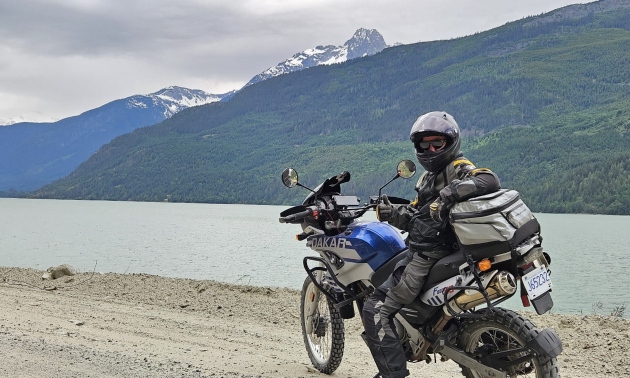
I'm Matt Greenberg. I live in Furry Creek, in the Sea-to-Sky corridor north of Vancouver, and I ride three bikes that cover three different jobs — a BMW 1250 RT for road and touring, a BMW F650GS Dakar for adventure riding, and a Kawasaki KLX300R for dirt.
By trade I'm a software engineer. I lead the mobile development team at Arc'teryx.
MarketMoto started with a mirror. I needed one, went looking on Facebook Marketplace, and got car mirrors, a bathroom vanity mirror and a floor lamp and a bunch of unrelated advertisements. Every rider has had that experience — hunting through furniture and baby clothes to find a set of bar-end mirrors, on a search that understands nothing about motorcycles.
I'd had the other half of it too. I once listed a jacket for $600, drove an hour to meet the buyer, and he offered me $125.
So I built the thing that should already exist. Motorcycles, parts and gear — no cars, no couches, no furniture. Search for a mirror and you get mirrors. It's on iOS, Android and the web, it's free, there are no fees and no commission, and I don't take a cut of anything anyone sells.
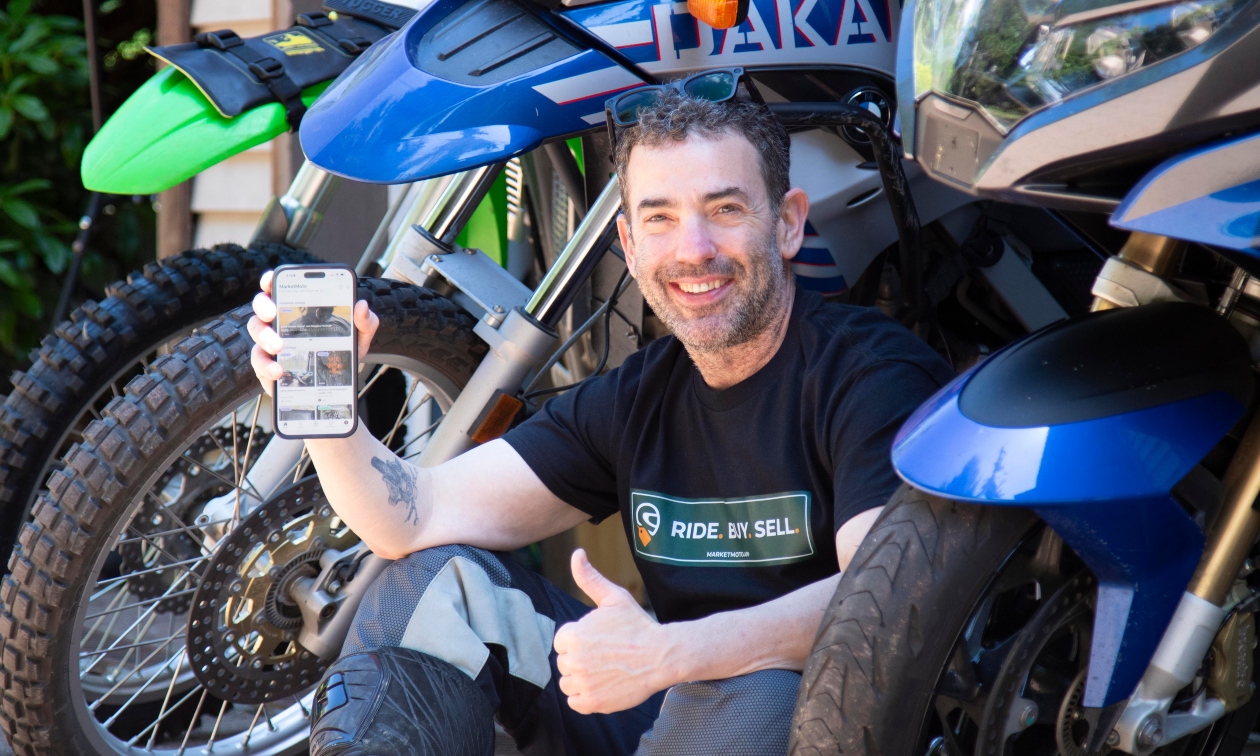
Greenberg developed MarketMoto to address the frustrations of general online marketplaces.
Since MarketMoto launched in May, what has surprised you most about how riders are actually using the platform?
How quickly people have been willing to list actual motorcycles.
I assumed the first few months would be gear and small parts — low-stakes items where it wouldn't much matter if a new platform didn't work out. Instead there are bikes. A Harley listed at $15,500, a KTM 890 Adventure, a Triumph Speed Triple. Those aren't throwaway listings. Someone putting a bike worth that much on a three-month-old marketplace is making a judgement about whether it's worth their time, and more riders made that call sooner than I expected.
What that tells me is that the frustration with the alternatives is real enough that people will try something new on a serious item, not just a spare helmet.
Are you seeing particular regions of Canada or types of riders becoming especially active?
British Columbia is strongest — Metro Vancouver and the Sea-to-Sky corridor in particular, which is where I ride the most and where it started.
That concentration is deliberate. A bike in Halifax is visible to a buyer in Vancouver but useless to them, because nobody's flying across the country for a used motorcycle. So what you're really building isn't national coverage, it's density one region at a time — enough listings within driving distance that it's worth a rider checking first. Get that right in one corridor and it's repeatable in the next.
The adventure crowd has been the most engaged by a distance. ADVrider ran a piece in June and it's still sending riders three months later, including one in Saskatchewan who listed something the same week he found us. ADV riders also buy and sell gear constantly, which plays directly to what the platform does best.
It's also opened to the US recently, and that's grown faster than I expected for something I haven't marketed there at all — riders finding it through ADVrider and signing up on their own. Canada's still the core and the Western provinces are where the density is, but it's a useful signal that the problem isn't just a Canadian one.
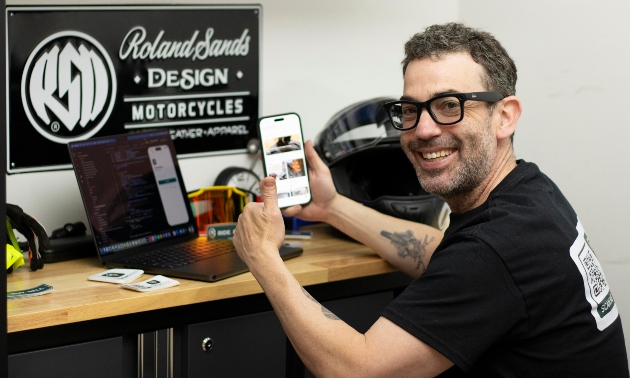
With MarketMoto, Greenberg is building a dedicated marketplace for powersports enthusiasts, with features designed to simplify listings and help buyers and sellers connect.
What have you learned about what makes motorcycle buyers and sellers trust a marketplace?
That clutter was only half of it.
The search problem is real — it's why I started building. But what sellers kept telling me once they were using it was something underneath that. I asked one recently what the painful part really was and he said: "a lot of flaky people, time wasters."
It's not just that you can't find the item. It's that you can't trust the person on the other end. People who message and vanish. Who say they'll come Saturday and don't. Lowballers who waste an hour of your day. At the worst end, I came across a rider whose bike was stolen by someone who'd come to view it from a Marketplace ad.
So MarketMoto is built around both. Every account is tied to a verified phone number, which means a throwaway account costs something to create. Ratings follow a seller across every transaction, so a good reputation is worth having and a bad one is hard to shed. You're dealing with riders who have something to lose, not anonymous accounts created ten minutes ago.
The AI Import feature is a pretty interesting solution to the “empty marketplace” problem. How has that feature been received, and are you seeing people use it to move listings over from other platforms?
It solves the single biggest obstacle to anyone trying a new marketplace, which isn't scepticism — it's that nobody wants to retype a listing they've already written somewhere else.
So you paste in a screenshot of your existing Facebook, Craigslist, or Kijiji listing and MarketMoto reads it and fills in the title, price and description for you. Add your photos and you're live in about a minute. It isn't asking anyone to leave Marketplace. It removes the reason not to be in both places at once.
The riders who've used it come back surprised at how little work it was, which is exactly the reaction I wanted. For anyone with a garage full of gear sitting in old listings, it's about as close to effortless as I could make it.
You’ve hinted that there’s more coming. What can you tell us about the next major features or changes you’re working on?
The biggest thing is a free route planner at routes.marketmoto.app. It's live now and I'm still putting real miles through it.
It does what every rider wants and no tool does simply: you type where you want to go, and it gives you a GPX file your nav app will actually accept, in the right order. If you've ever imported waypoints into BMW ConnectedRide and watched it sort them alphabetically, you know the problem.
It also plans for you. Tell it you've got two days out of Squamish and want gravel, and it suggests routes — then measures them against real road data rather than guessing at the numbers. The adventure mode is calibrated against actual timed runs on forest service roads, the Hurley included, because a 90 km FSR day is nothing like a 90 km highway day and most planners treat them the same.
Completely free, no account needed. It's branded MarketMoto because it's for the same riders, but there's nothing to sign up for and nothing being sold.
Alongside that, MarketMoto itself now runs entirely in a browser at marketmoto.app — browse, list, message, no download. And I'm deepening the trust side, so a seller's history and reputation are visible before you drive across town to meet someone.
Is MarketMoto staying focused strictly on motorcycles, parts and gear, or are you looking at adjacent powersports categories? In particular, is the snowmobile community part of the longer-term thinking?
Yes, and your readers are a big part of why.
The sled community has exactly the same problem I built this to solve. You're hunting through furniture to find a set of A-arms, dealing with the same no-shows and lowballers, and no general marketplace understands what you're actually looking for. A buy/sell group near me — ten thousand members, bikes and sleds and quads together — describes itself as "no more hunting through posts about baby clothes or having your sled pushed to the bottom by a pair of shoes." That's snowmobilers arriving at my complaint independently.
There's a seasonal logic too that I find hard to ignore. Riding season in Western Canada winds down in October and sled season starts right about then. Those two markets are almost perfectly counter-cyclical, and a platform serving both is busy all twelve months instead of seven.
So it's going on the roadmap. The one thing I'd want to get right is the discipline — the reason MarketMoto works is that nothing irrelevant is on it, and expanding has to mean a proper sled experience with its own categories and its own search, not sleds dumped into a motorcycle app. Done well, it's a natural fit. Done lazily, it's the thing I was annoyed by in the first place.
Genuinely, I'd like to hear from readers on this. If sledders tell me they want it, that moves it up the list considerably.
What does success look like for MarketMoto over the next 12 months?
Density, and then repeatability.
The first goal is a handful of regions where MarketMoto is genuinely the first place a rider checks for a part — enough inventory within driving distance that it beats the alternatives on usefulness, not just on principle. The Lower Mainland and Sea-to-Sky first, then the same playbook in the next corridor.
The second is sellers who come back. One listing is curiosity. A second listing means the first experience was good enough to repeat, and that's the number I watch most closely.
And I'd like parts and gear to be the thing MarketMoto is known for nationally. That side isn't limited by geography — a skid plate ships anywhere — so there's no reason a rider in Winnipeg shouldn't be finding exactly the part they need from a seller in Kelowna. That's the piece with the most room to run.
Longer term I'd like MarketMoto to be more than a place to buy and sell. The route planner is the first step in that — free, useful, nothing to sign up for. If it becomes a thing riders in this part of the world reach for, that matters to me as much as the marketplace does.
For riders who sell specialized or model-specific parts, what problem are you trying to solve that a general marketplace doesn’t?
A general marketplace doesn't know what your part is.
Search "mirror" on Facebook and the system has no idea whether you mean a bar-end mirror for an R1200GS or something for a bathroom wall. It can't tell a fork seal for a 2015 KTM 350 from any other seal. So specialized parts are effectively invisible — they exist, they're listed, and nobody finds them.
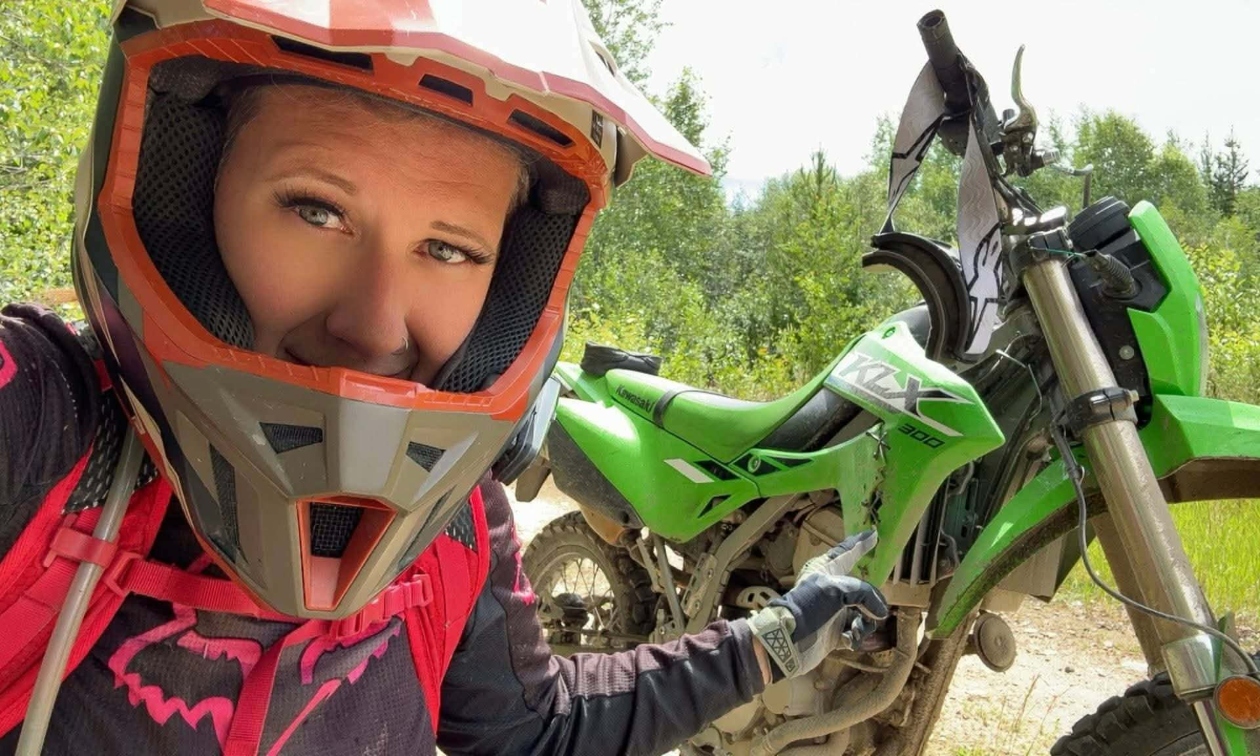
People give up as a result. I came across a rider who'd spent over a year hunting OEM plastics for a KLX300 before giving up and buying new from a dealer. Those plastics were almost certainly sitting in someone's garage the whole time. There was just no way for the two of them to find each other.
On MarketMoto every listing has its own indexed page, so a part is findable by its actual name and model — on the platform and on Google. Someone searched Google for a Husqvarna Norden 901 skid plate recently and landed straight on the listing for one. That's the mechanism, and it works better the more specific the part is, which is the exact opposite of how a general marketplace behaves.
And because parts ship, that seller isn't limited to whoever's local. A rider with a shelf of model-specific takeoffs has a national audience for the first time.
What do you think?
Should MarketMoto expand to include snowmobiles, parts and gear? Share your thoughts and help shape the conversation about what a snowmobile marketplace should look like.